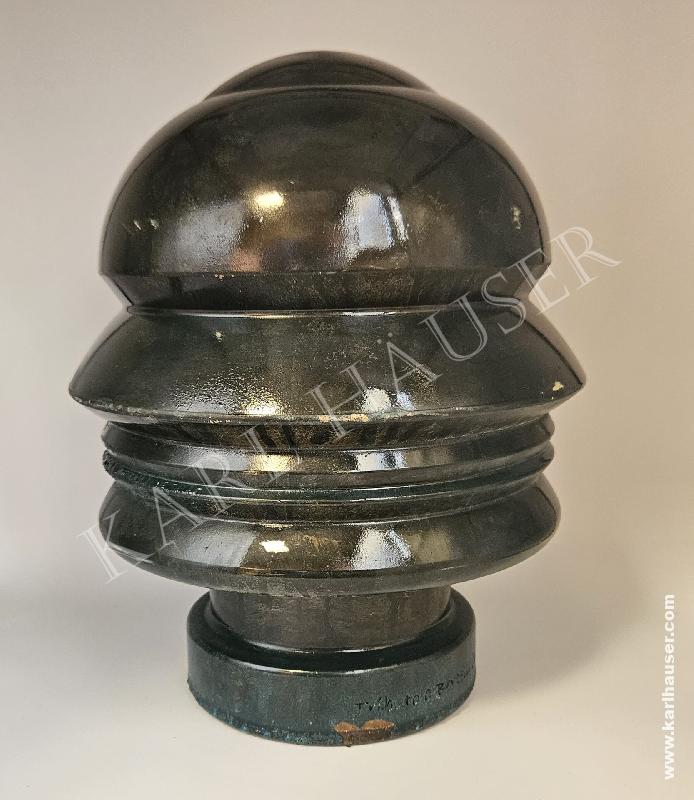
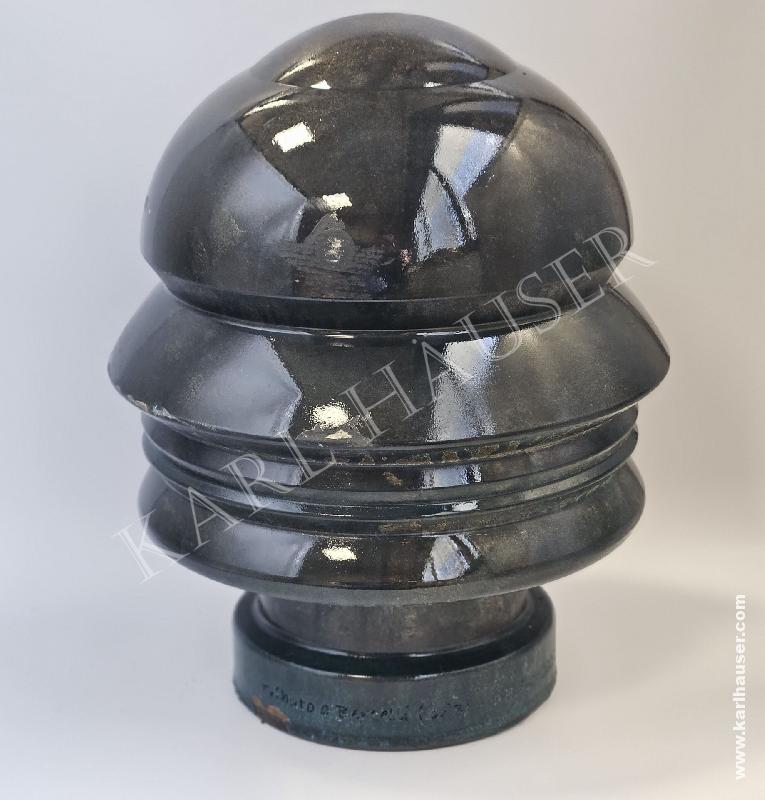
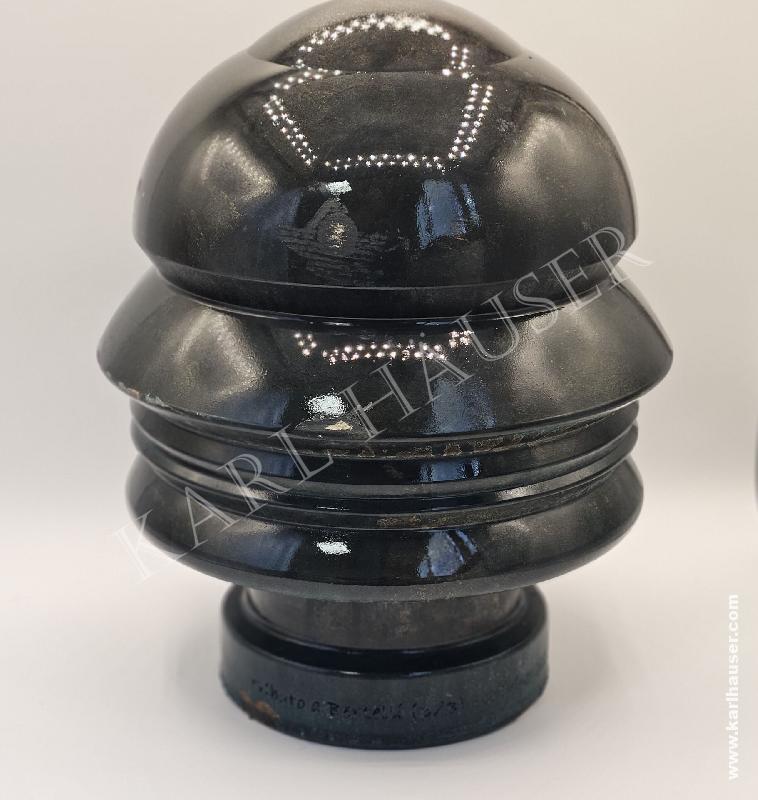
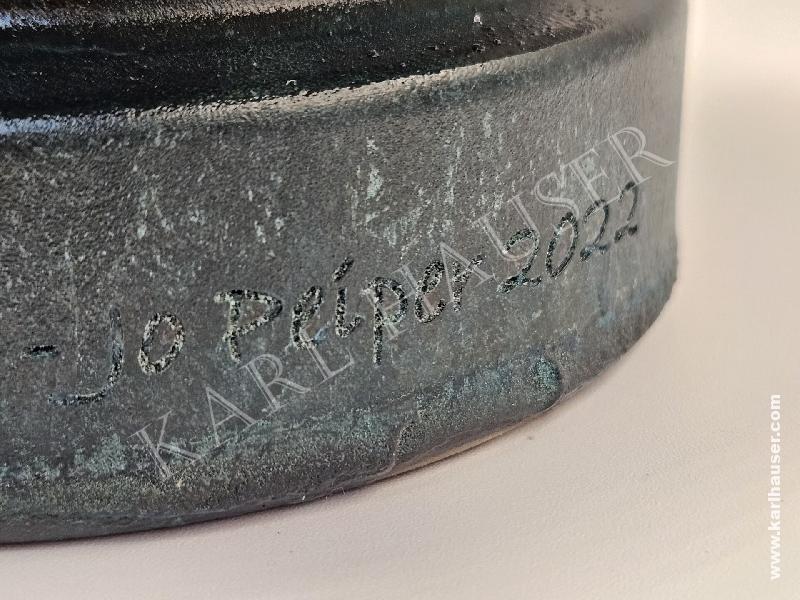
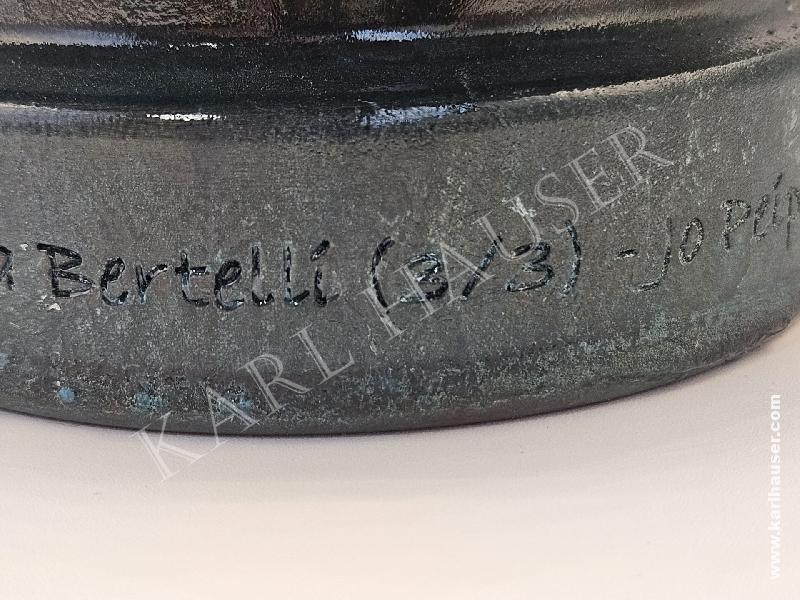
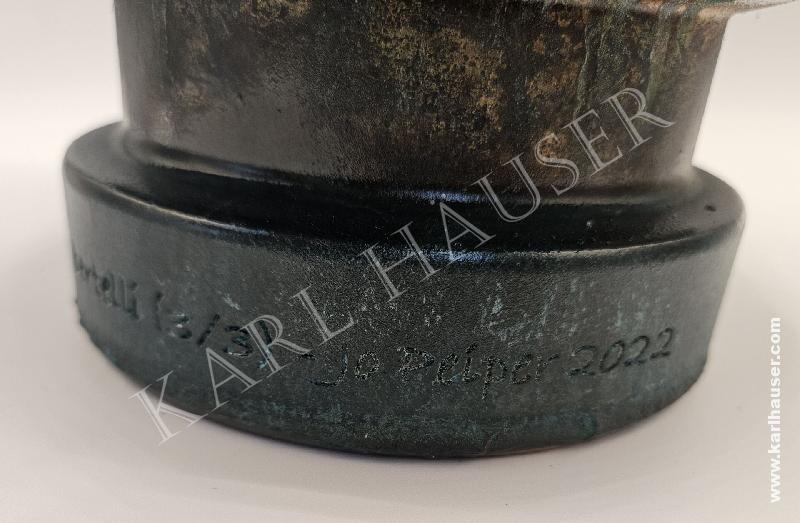
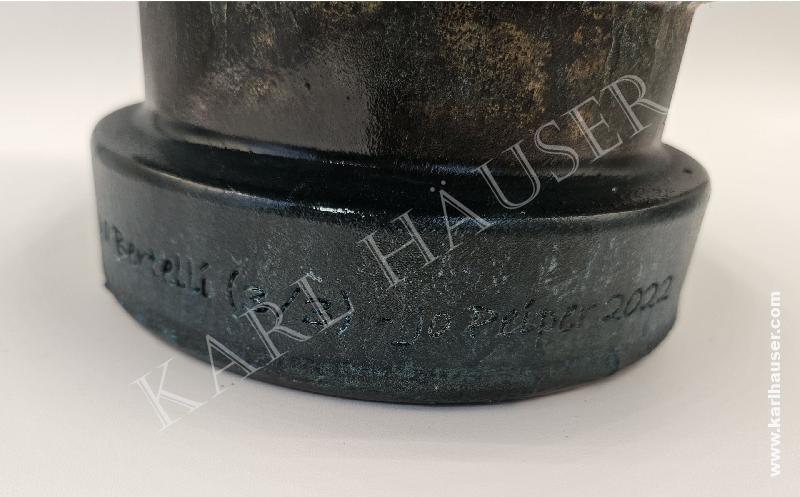
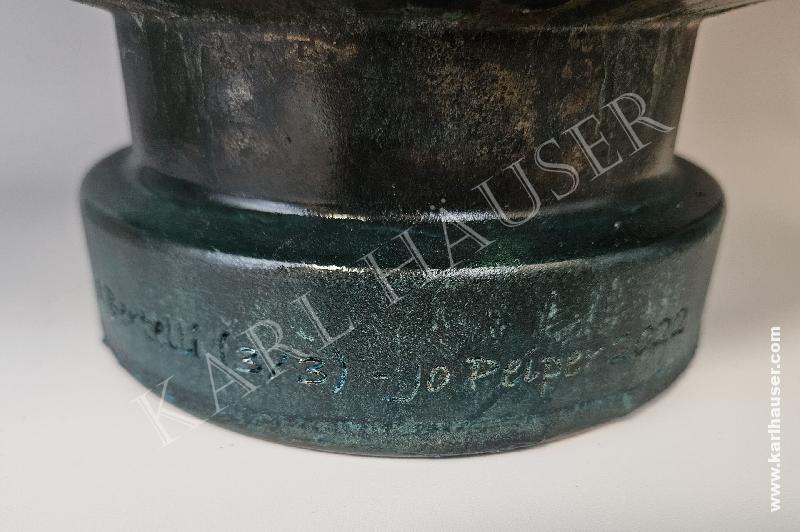
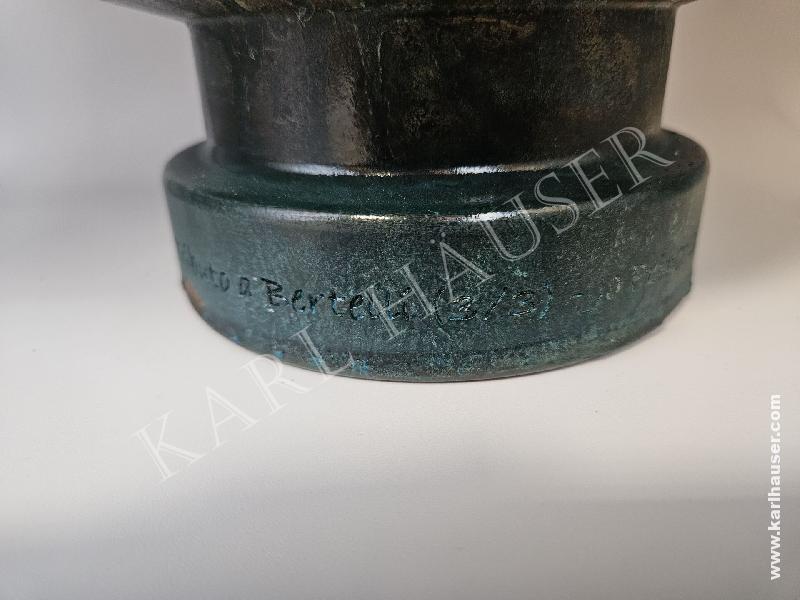
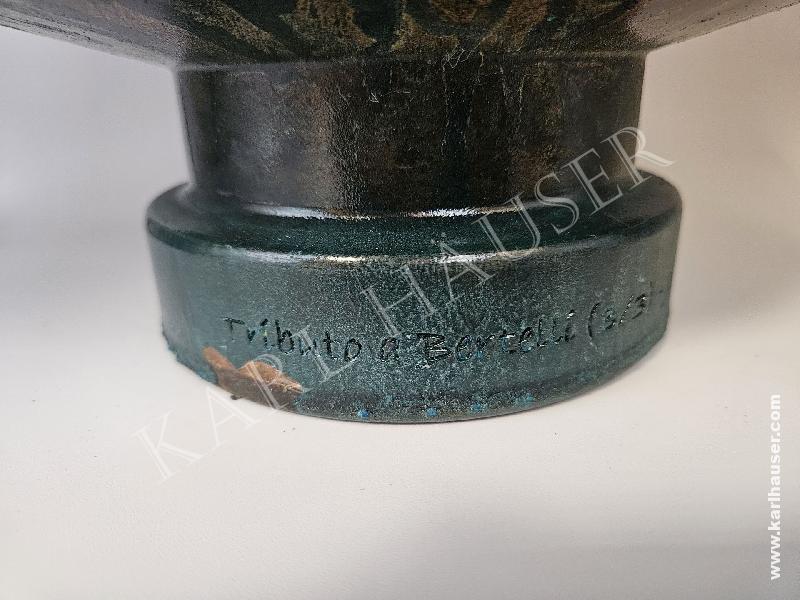
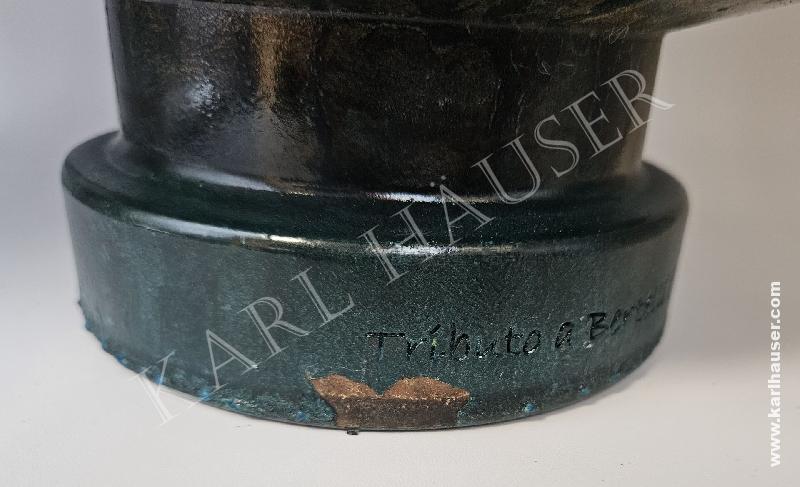
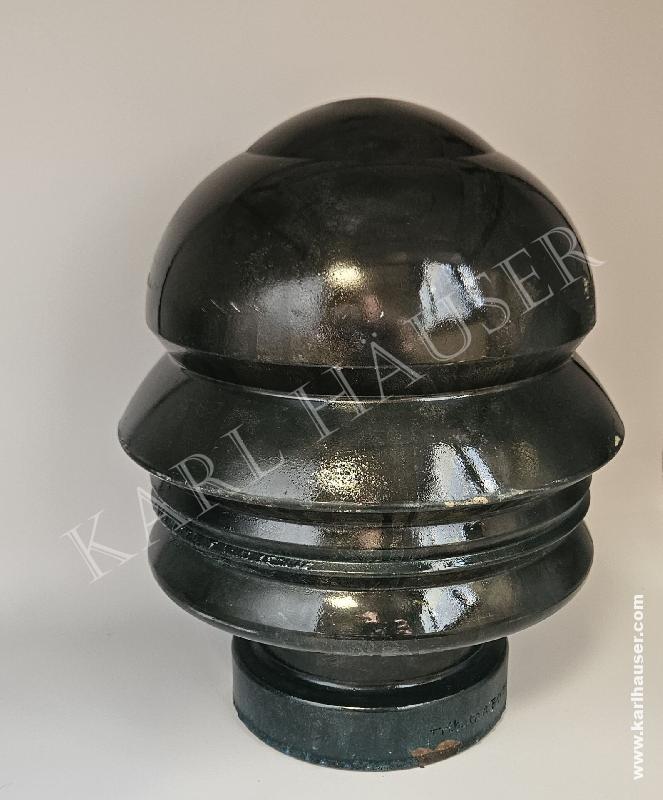
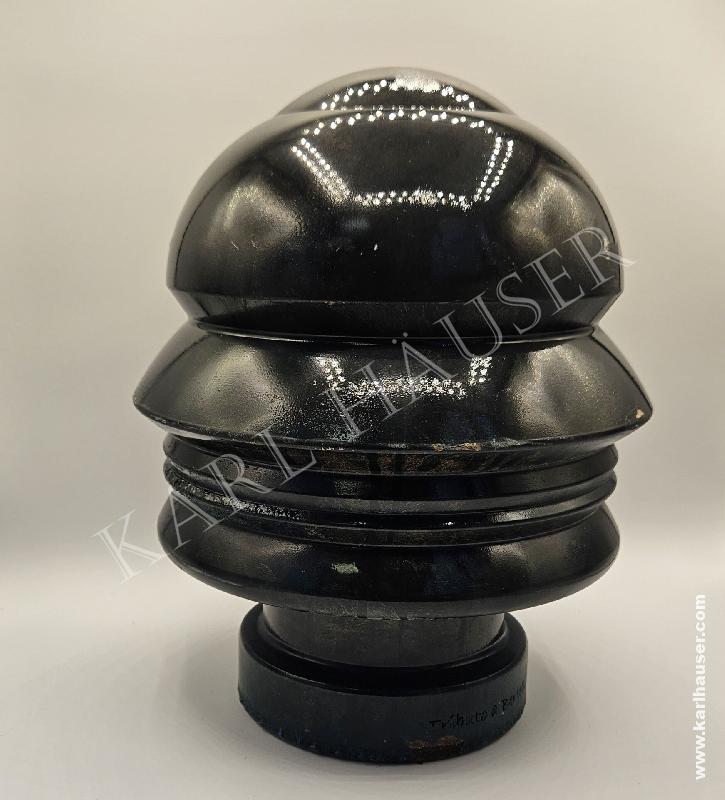
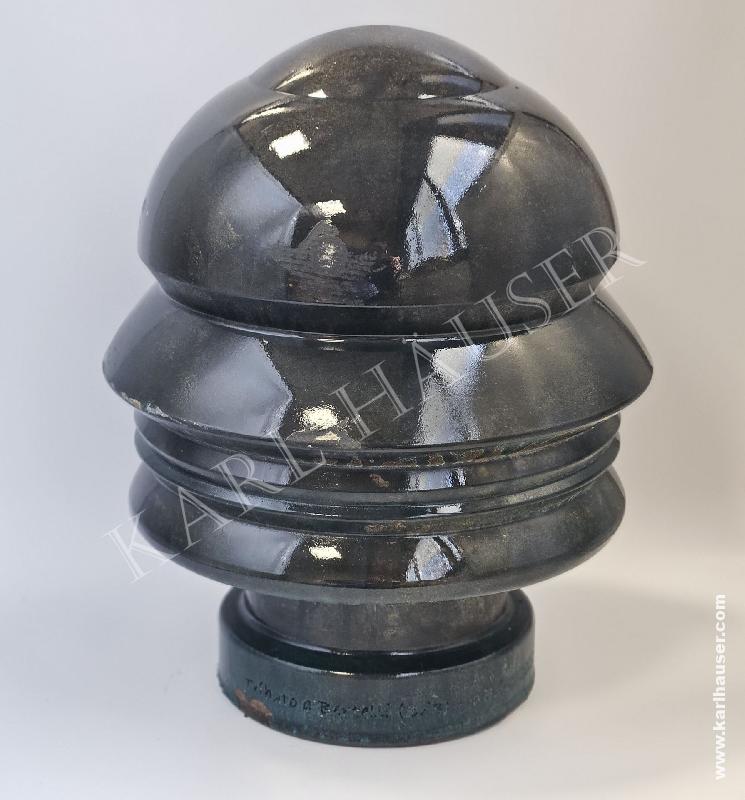
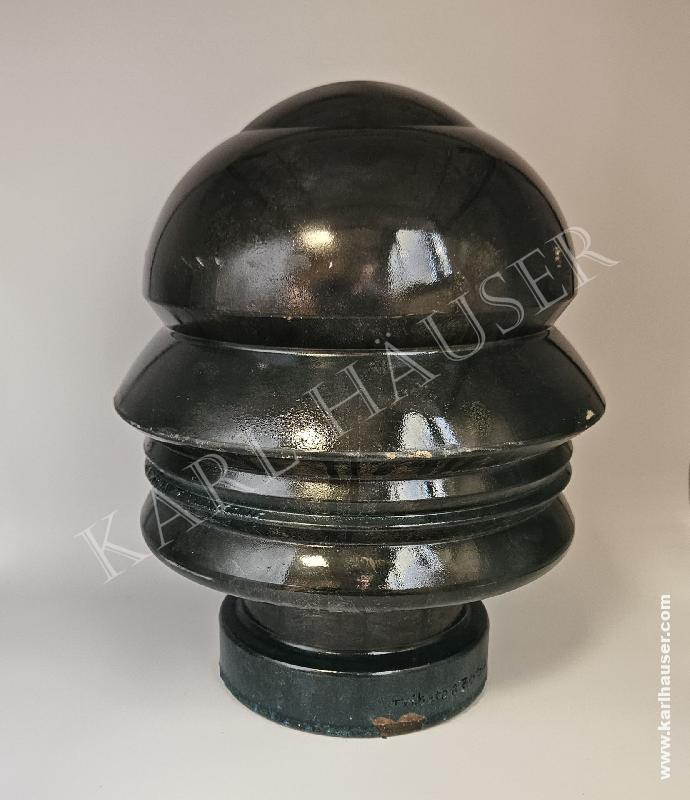
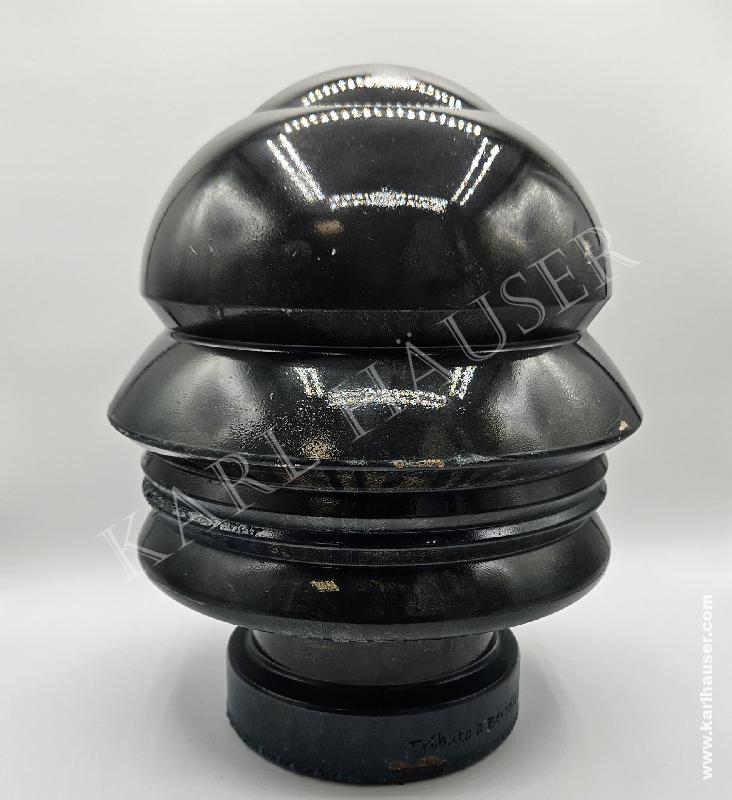
Profilo Continuo Tribute to Bertelli by Jo Peiper 2022Bronze casting
250 mm x 250 mm x 250 mm – weight (approx) 50 Kg
(this item is an authentic unique piece that comes with its certificate of authenticity released by the author and when availabe, we also supply the list of shows and galleries in which it has been exposed)
€4,800.00 Tax. included
Beschreibung
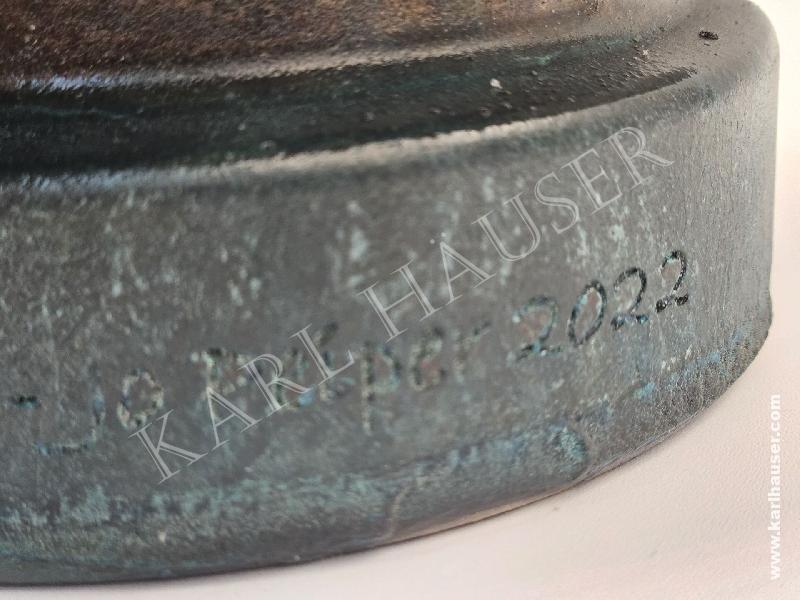
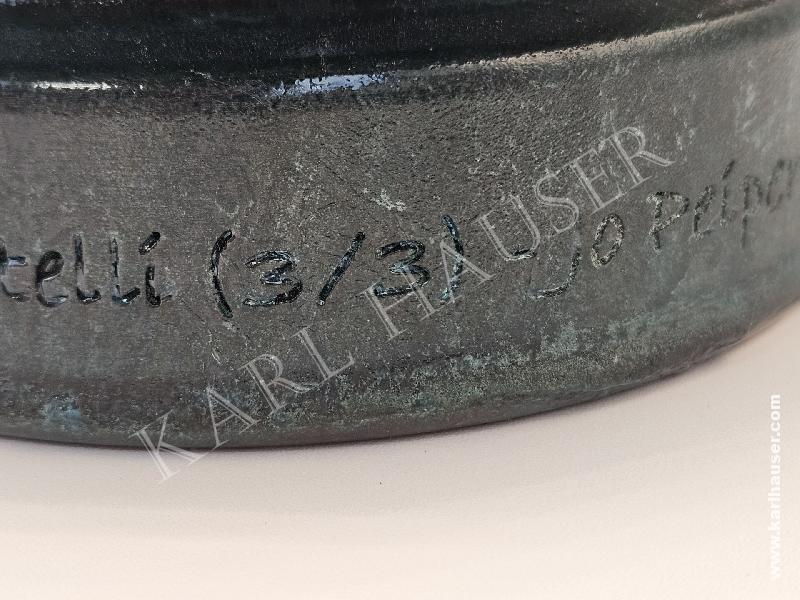
Universalmente riconosciuta come l’opera più famosa di Renato Bertelli, nel suo decennio vitale, questa forma plastica circolare, ideata nel 1933, fondeva in un geniale effetto statico-dinamico art déco e futurismo. Incontrò un buon risultato commerciale e fu successivamente prodotta in serie in diverse versioni, in terracotta bronzata, legno e alluminio. Mussolini lo approvò come ritratto ufficiale, che la diffuse in case del Fascio, uffici e abitazioni private, non solo italiane. Una forma nella quale il richiamo classico del Giano bifronte confluiva nei principi dinamici futuristi enunciati da Umberto Boccioni riguardo alla linea curva, elemento privilegiato in quei medesimi anni trenta dai più moderni architetti italiani. Il dinamismo plastico del Profilo del Duce visibile da ogni punto (come ha osservato Marco Moretti, critico d’arte e studioso dell’artista) rilanciava «senza retorica la metafora di un Capo vigile e insonne che tutto vede e sorveglia». Svincolato oggi dal retaggio dell’epoca, il Profilo Continuo, considerato come testata d’angolo del secondo futurismo, è un’opera d’arte richiesta nelle più importanti mostre in ogni parte del mondo, continuando a stimolare, come già negli anni ottanta il fotografo Robert Mapplethorpe e lo scultore Tony Cragg, la creatività di numerosi artisti. Pochissimi esemplari sono giunti ai giorni nostri, tutti comunque presenti presso musei e poche raccolte personali. Nel 2022 ad esattamente un secolo dalla marcia su Roma, l’artista Jo Peiper ha realizzato tre profili continui in fusione di bronzo, con un diametro di circa 25 cm ed un’altezza sempre di 25 cm per un peso di quasi 50Kg di puro bronzo. Ciascun pezzo è numerato e firmato dall’artista come „Omaggio a Bertelli“. Questo è il numero 3 di una serie di soli tre esemplari al mondo.
Recognized all over the world as Renato Bertelli’s most famous work, this circular plastic form, conceived in 1933, fused Art Deco and Futurism into a brilliant static-dynamic effect. It met with good commercial results and was subsequently mass-produced in several versions, in bronzed terracotta, wood and aluminium. Mussolini approved it as an official portrait, which he distributed in Fascist homes, offices and private homes, not only in Italy. A form in which the classical reference of the two-faced Janus flowed into the dynamic Futurist principles enunciated by Umberto Boccioni regarding the curved line, an element privileged in those same 1930s by the most modern Italian architects. The plastic dynamism of the Profile of the Duce visible from every point (as Marco Moretti, art critic and scholar of the artist, observed) relaunched «without rhetoric the metaphor of a watchful and sleepless Chief who sees and watches everything». Freed today from the legacy of the era, the Profilo Continuo, considered a corner head of the second Futurism, is a work of art in demand in the most important exhibitions around the world, continuing to stimulate, as already in the 1980s by photographer Robert Mapplethorpe and sculptor Tony Cragg, the creativity of numerous artists. Very few specimens have survived to the present day, all of which are present in museums and few personal collections. In 2022, exactly one century after the March on Rome, artist Jo Peiper created three continuous bronze cast profiles, with a diameter of approximately 25 cm and a height of 25 cm, weighing almost 50 kg of pure bronze. Each piece is numbered and signed by the artist as „Homage to Bertelli“. This is number 3 in a series of only three examples in the world.
Giacchino Peiper, better known as Jo Peiper is an Italian sculptor, printmaker, and painter. Critical awareness of current issues and irony, but also strong contrasts and references to the great artists of all time to whom he often dedicates his tributes; these are the aspects that characterize Jo Peiper’s works. Preferring mixed media on canvas, the artist expresses with great energy his sensitivity, stimulated by both current events and themes. The discussion never ceases to animate debates such as feminism, racism, and the ideological excesses that have characterized past eras and are still relevant today. The common thread that characterizes each work can be deduced from the historical-cultural academic path that Jo Peiper has developed over the course of his life as an artist. The subjects range from the abstract to the female body, from dystopian settings such as her well-known homage to Mimmo Rotella to representations of historical figures, sometimes very controversial and represented by the artist as always with great irony. Appreciated by an initially niche market, the artist has seen the number of his works purchased by collectors grow, also thanks to the visibility of the web, on which he is nevertheless present in a discreet and decidedly uncommercial way. Maintaining the anonymity of his pseudonym and confirming its ironic nature and always aimed at highlighting dichotomies and contradictions, the author is aware of the resonance of social networks but shuns the spotlight both for the criticism and for the applause, dismissing the curious with a lapidary and evocative “So it is (if you like)” that paraphrases the great Luigi Pirandello, confirming, if it still serves, of one’s attachment to the classics, including literary ones, and to history.
Shipping information
| Gewicht | 55 kg |
|---|---|
| Maße | 50 × 50 × 50 cm |